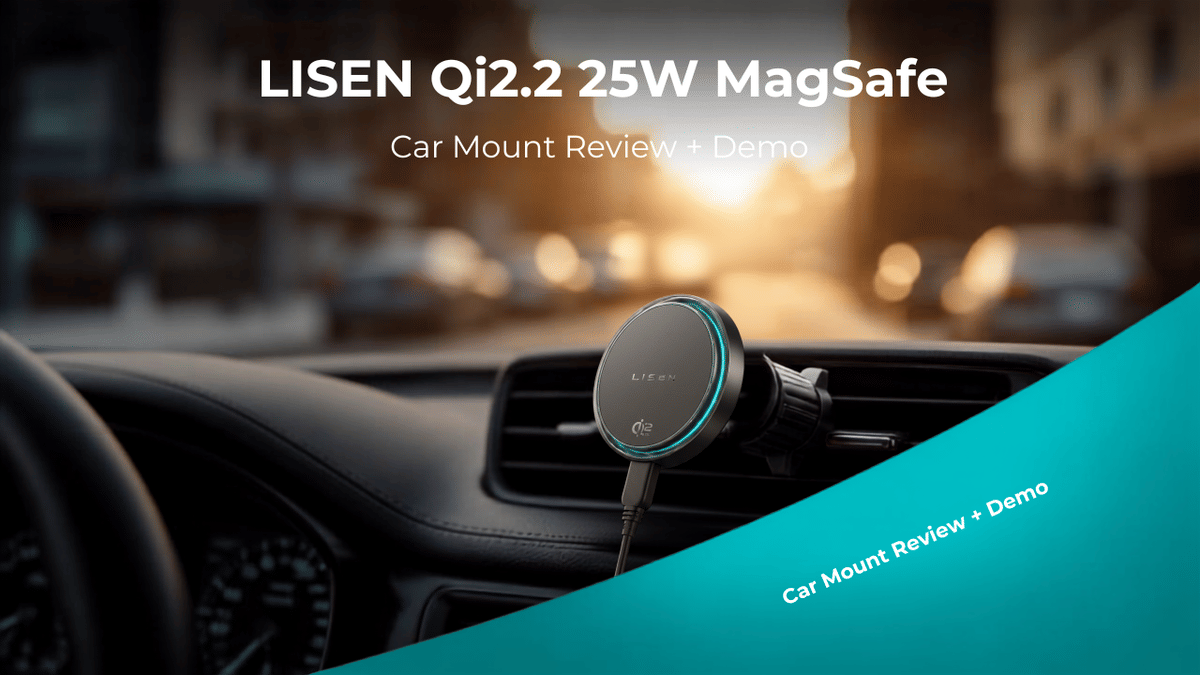
A built-in wireless charging pad sounds great until your phone slides around, sits too low to see, or simply refuses to stay put. That was exactly the issue in my 2025 Toyota Tundra. The factory charging cubby was not giving me a consistent charge or a useful place to keep my phone visible when parked.
The LISEN Qi2.2 25W magnetic car mount charger solves a lot of that. It gives you a strong magnetic hold, quick wireless charging, and a much better phone position for navigation, calls, and everyday use. But there is one important mounting tradeoff to understand before you buy it.
Key Takeaways
The LISEN charger provides a strong magnetic hold and consistently quick real-world wireless charging.
The included adhesive and clamp mounts offer flexibility for different vehicle interiors.
Mount stability depends heavily on the rigidity of the selected vent, panel, or dashboard surface.
The charger is a practical upgrade over an unreliable factory wireless charging cubby.
Table of Contents
What Comes in the Box
LISEN includes a complete package, so there is not much else needed to get started. Inside the box, I found:
The round magnetic Qi2.2 wireless charging puck
A USB-C to USB-C cable
A 12V cigarette-lighter power adapter
An adhesive mounting base with an adjustable ball joint
A clamp-style mount for attaching to a vent or similar surface
Instructions with a QR code for the setup tutorial
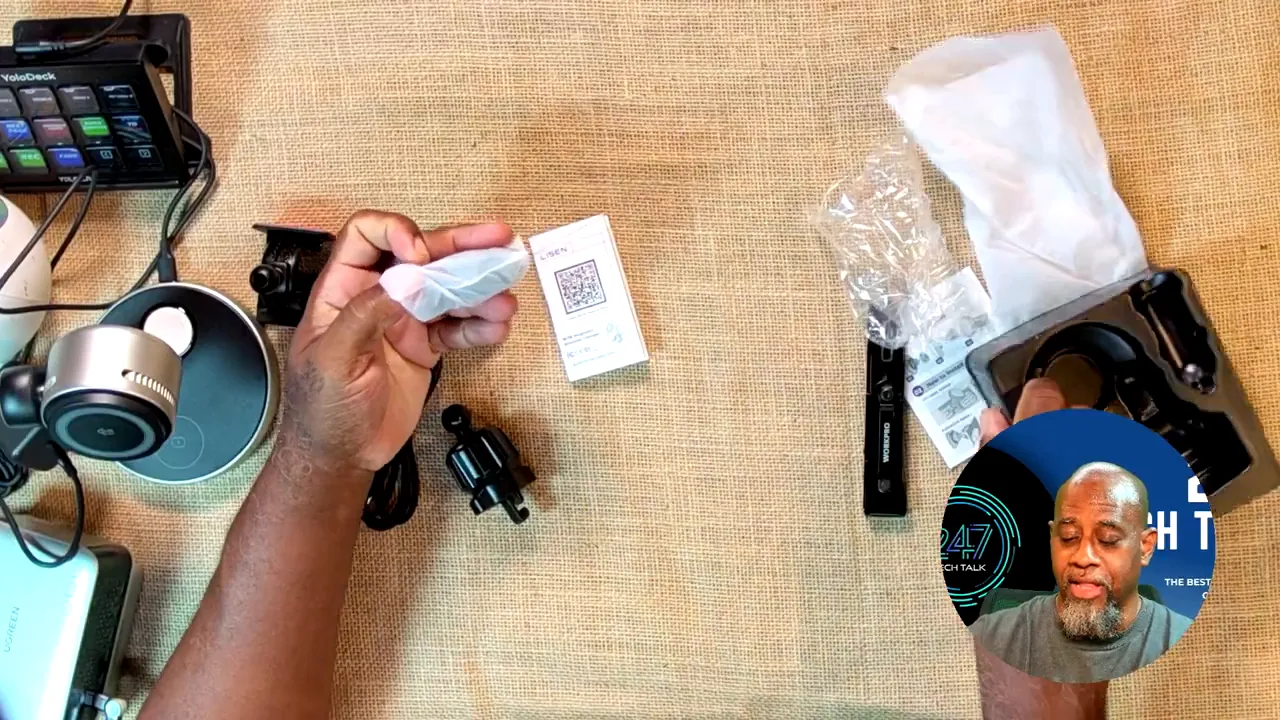
The box includes the charger, power hardware, and two distinct mounting approaches.
The charger itself attaches to the mounting hardware using a ball joint. That gives you flexibility to adjust the angle, which is important if you want a clear view of your screen without placing it directly in front of something else in the cabin.
Mounting Options: Adhesive Base or Clamp Mount
The first option is an adhesive base. It sticks to a dashboard or other flat panel, and the mount can move side to side to help you find the right angle.
That is useful, but I am cautious about permanently sticking accessories to the dash. My truck is leased, and I do not want adhesive residue or damage becoming an issue later. If that is a concern for you too, the clamp mount is the better place to start.
The second option opens up and clamps around a surface. In my setup, I used it on the driver-side air vent area. It has the same ball connection as the adhesive mount, so you still get adjustable positioning without committing to a glued-on installation.
One thing to plan for is cable routing. I plugged the included USB-C cable into the charger and ran it to a 12V outlet using the supplied power adapter. Depending on the layout of your vehicle, you may need to take a little time to keep that cable tidy and away from controls, vents, or trim pieces.
My Toyota Tundra Installation
I chose the left-side vent area near the steering wheel because it gave me a better line of sight than the factory charging cubby. It also kept the phone up where I could use it while parked, instead of balancing it awkwardly in the dash area.
The 12V power connection came on immediately after plugging it in. Once the charger was powered, the illuminated ring gave it a nice little touch in low light, and the phone attached right away.
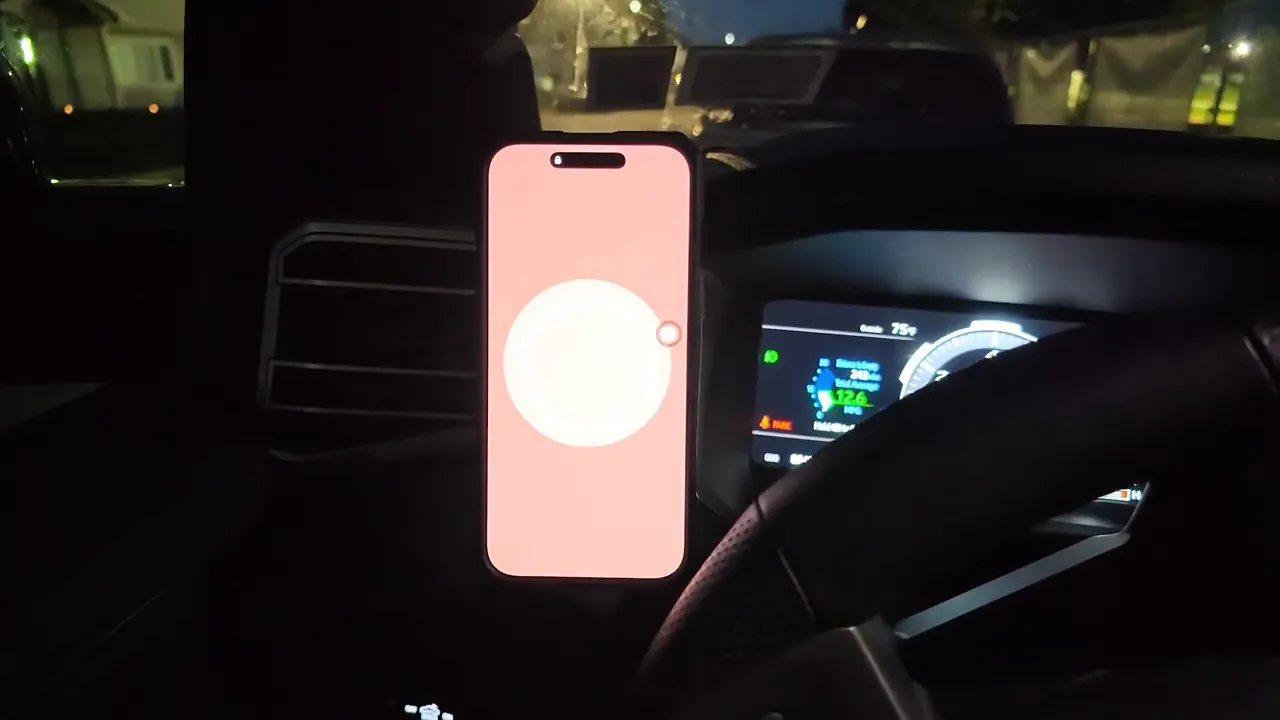
The phone locks onto the magnetic charger and immediately shows that it is receiving power.
For my vehicle, the side of the vent location was the best compromise. It is accessible, visible, and does not require sticking anything directly to the dashboard. Your best location may be different, especially if you have a more solid space is available on your dash panel.
Magnetic Hold Is the Strong Point
The magnetic pull is excellent. My phone has some weight to it, but once it was placed on the LISEN charger, it held firmly. I did not have a problem with the phone falling off the magnetic pad.
That is the big win here. A magnetic car charger needs to do two things well: hold the phone securely and charge it consistently. This one delivered on both in my use.
The phone can also be positioned vertically or angled as needed. That makes it more practical for maps, hands-free calls, and keeping an eye on your phone.
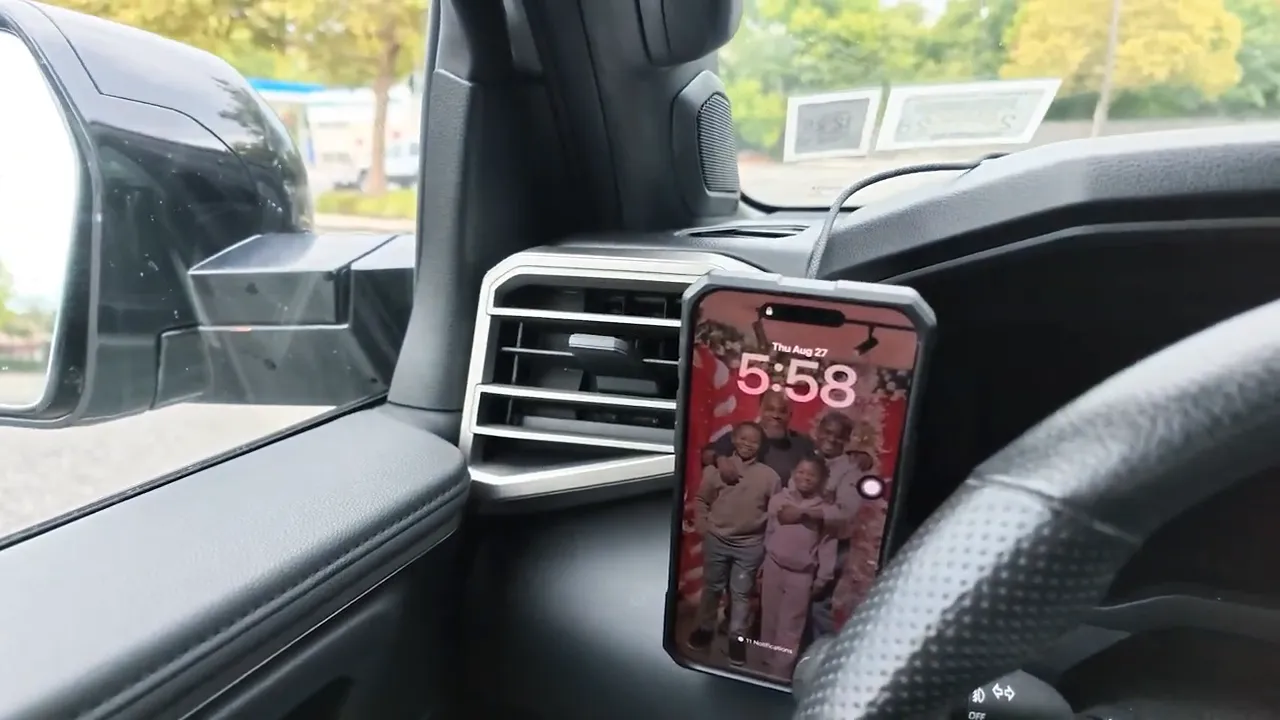
The vent placement raises the phone above the factory charging cubby for easier access.
Charging Speed and Everyday Convenience
LISEN markets this as a Qi2.2 25W car mount charger, and in real use it charged my phone quickly. I was more concerned with consistency than staring at a spec sheet, because the factory wireless charging area in my truck was unreliable for me.
This mount solved that problem. Instead of constantly reaching for a cable, I can just put the phone onto the magnetic charger and let it do its thing.
That convenience matters more than it may sound. When you are getting in and out of the vehicle, running errands, or sitting somewhere for a while, it is nice to have a charger that also keeps your phone in a usable place.
I did not run a timed laboratory charging test, so I would not treat this as a measured head-to-head charging-speed comparison. What I can say is that the real-world charging performance felt fast, stable, and much more practical than my truck's built-in wireless pad.
The Main Drawback: The Mount Can Move on Rough Roads
Here is the part you need to know before buying. The phone itself stays attached very well, but the mount position can shift depending on where you install it.
There is roughly a three-inch gap created by the base, the charging puck, and the phone. That creates leverage. On rough roads, especially the kind of roads we deal with in New York, that weight can make the mount move.
The mounting mechanism clicks into position, but it is not extremely stiff. A hard bump can cause the charger and phone to bounce or tilt. In my case, the panel and vent location contributed to the vibration, so this is not necessarily a problem with every vehicle or every mounting location.
To minimize that movement:
Choose the most rigid mounting surface available in your vehicle.
Keep the phone slightly lower if a high position vibrates too much.
Test the angle before committing to an adhesive installation.
Make sure the cable has enough slack that it is not pulling on the charger.
Consider a different mount location if your vent or panel flexes while driving.
I can live with the movement in my current setup because I chose not to use the vent option. Later on, I may try another location and see whether I can create a more stable mounting solution.
Is the LISEN Qi2.2 25W Car Mount Charger Worth It?
Yes, for me it is a two-thumbs-up product. It is affordable, charges quickly, holds the phone with a seriously strong magnet, and makes day-to-day phone use in the truck much more convenient.
The one caveat is that mount placement is everything. The magnetic hold is not the weak point. The stability of the overall setup depends on whether the surface, vent, or panel in your vehicle can support the extra reach and weight of a larger phone.
If your current wireless charging pad is inconsistent, your phone sits too low to use comfortably, or you just want a clean MagSafe-style charging solution in the car, this is a solid option. Take a few minutes to think through where it will mount before installing it, and you should be in good shape.
|
Frequently Asked Questions
Does the LISEN Qi2.2 charger come with a power adapter?
Yes. The package includes a 12V cigarette-lighter power adapter along with a USB-C to USB-C cable.
Does the phone stay attached on the LISEN magnetic charger?
Yes. The magnetic hold is very strong, including with a heavier phone. The concern is mount movement on rough roads, not the phone detaching from the charger.
Can the LISEN car charger mount to an air vent?
Yes. It includes a clamp-style mount that can attach around a vent or another suitable surface, plus an adhesive mounting option.
Should I use the included 12V adapter?
The included 12V adapter is the intended power solution and is the best choice for supplying the charger in this setup.