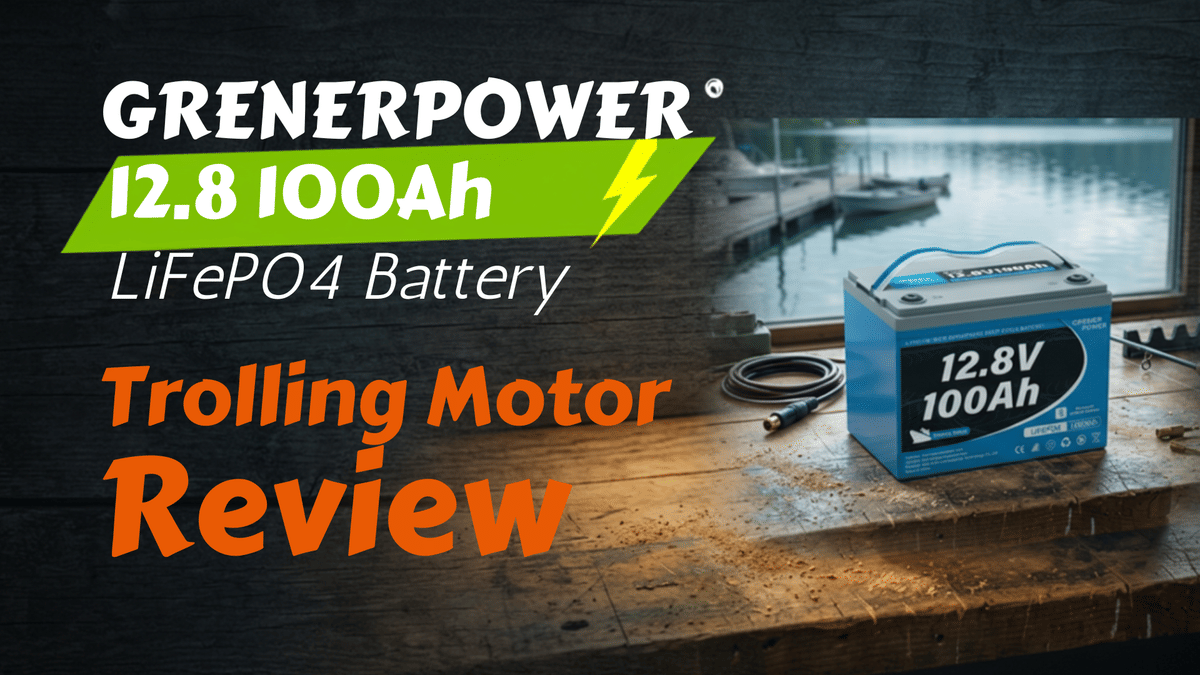
A 12V battery does not have to live in a boat to earn its keep. For anybody doing e-bike work, motorcycle projects, accessory installs, portable power experiments, or general 12V testing, a solid lithium battery on the workbench can be a seriously useful thing.
That is why I was interested in putting the GRENERPOWER 12.8V 100Ah LiFePO4 trolling motor battery through a practical first look. It is built and marketed for trolling motors, but it also fits right into a garage workshop where 12V power is always needed.
Key Takeaways
The GRENERPOWER battery is rated at 12.8V, 100Ah, and 1,280Wh of LiFePO4 energy storage.
A built-in 100A BMS and Bluetooth app provide protection and useful battery-status monitoring.
A lithium-compatible charger fully charged the battery successfully before the practical power test.
The battery powered a 12V air compressor, making it a useful option for workshop accessories.
Table of Contents
A compact 12V 100Ah battery with serious stored energy
This is a BCI Group 24 size 12.8V, 100Ah lithium iron phosphate battery. That works out to 1,280Wh of stored energy, which is plenty of capacity for a trolling motor, but it also opens up a lot of options for a workbench, RV, kayak, camping setup, solar project, or emergency-power station.
The battery arrived well protected in its box, with the main unit, a manual, terminal hardware, and red and black terminal covers. The covers are a small but welcome addition. When the battery is not in use, keeping the positive and negative terminals protected is just good practice.
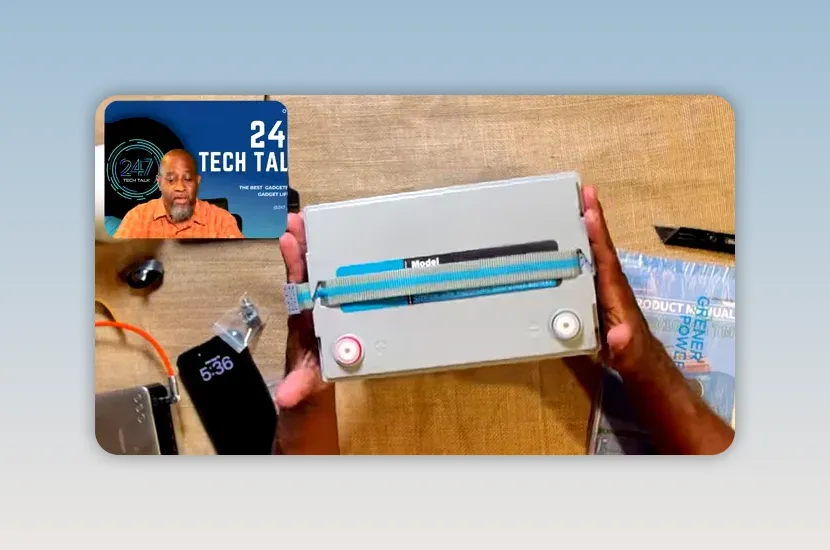
The terminal layout is simple, clearly marked, and ready for standard 12V connections.
What the manual lists for this LiFePO4 battery
The product manual lays out the important specifications. On paper, this is a well-equipped 12V lithium battery for portable or installed power applications.
Nominal voltage: 12.8V
Capacity: 100Ah
Energy: 1,280Wh
Battery chemistry: LiFePO4, or lithium iron phosphate
Built-in protection: 100A battery-management system, or BMS
Dimensions: approximately 10.2 × 6.7 × 8.27 inches
Weight: approximately 23.28 pounds
Self-discharge: less than 3% per month
Charging efficiency: listed at 99%
Charge-voltage range: 13.8V to 14.6V
Case material: ABS plastic
The built-in BMS is a major part of the appeal here. It is the system responsible for managing the battery pack and protecting its cells during charging and discharging. For a battery that could be used in a boat, workshop, camping rig, or backup-power project, that protection matters.
The manual also calls for fully charging the battery before use and mentions activating the five-year warranty. As always, make sure the charger you plan to use is compatible with LiFePO4 batteries and the stated charge-voltage range.
Setup: terminal covers, polarity, and charging
The connection process is straightforward, but it is still 12V power, so do not get careless. The positive terminal is marked red and the negative terminal is marked black. Install the supplied terminal hardware securely, connect red to positive and black to negative, and make sure the connections are solid before powering a load or charger.
I used a lithium charger already used for motorcycle batteries. Its indicator began red while charging and turned green when the battery reached a full charge. It charged successfully, which was a good practical start.
A simple safe-use checklist looks like this:
Confirm that the battery terminals are clean and unobstructed.
Install the terminal bolts tightly enough for a reliable connection.
Connect positive first with the red lead, then negative with the black lead.
Use a charger intended for lithium batteries and compatible with the specified voltage range.
Protect the exposed terminals with the supplied caps whenever the battery is stored or disconnected.
Keep an eye on the charger indicator and disconnect once charging is complete.
That last point is especially important on a workbench. I do not like leaving a battery charging in a hot indoor studio overnight. Charge it in an appropriate area, keep the setup supervised when possible, and treat it like the energy storage device it is.
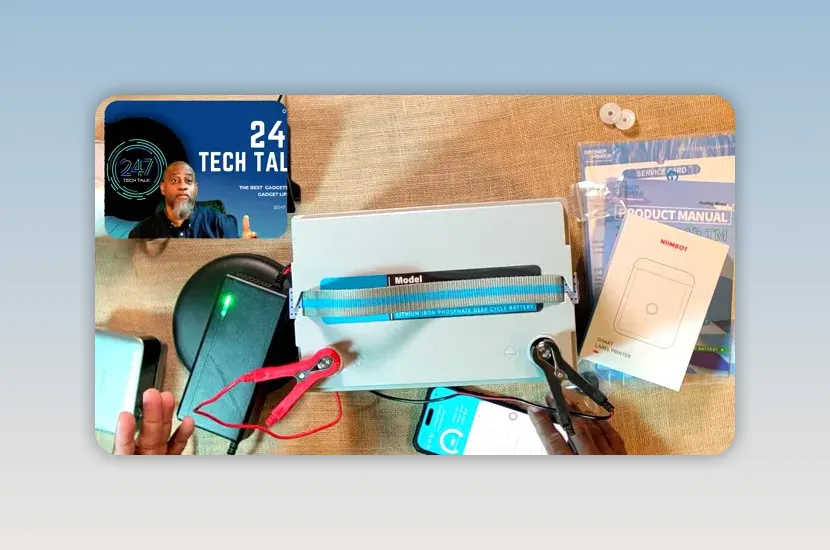
A lithium-compatible charger was connected with clearly separated positive and negative leads.
Bluetooth monitoring is the feature that makes workshop use better
The Bluetooth feature is what really makes this battery feel like more than a plain old 12V box on the bench. After registering an account and pairing a phone with the battery, the app showed the battery connected, at 12V, and fully charged.
The dashboard provides a clear battery percentage readout and shows the information needed to keep an eye on the pack. The available pages include:
Battery percentage and connection status
Bluetooth name and battery parameters
Charge and discharge information
MOS settings
Battery-pack information
Firmware-update status
Usage history
The key benefit is simple: when you put a load on the battery, you can check the draw and monitor the battery condition without guessing. You do have to be close enough for the Bluetooth connection, but it is still much more convenient than walking over and checking a meter every time.
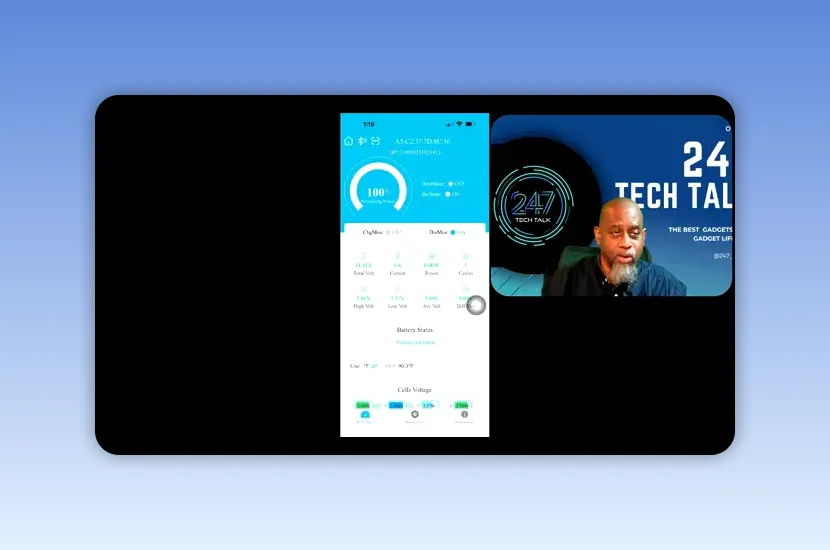
The Bluetooth app provides a quick view of charge level and live battery status.
Putting the battery to work with a 12V air compressor
For the real-world workshop check, I connected the battery to a small 12V air compressor, the type used for car tires, basketballs, and other inflation jobs. The compressor powered up, its display lit, and it ran successfully from the battery.
Now, this was a quick functional demonstration, not a controlled runtime or maximum-load test. It does not prove every performance claim or tell us exactly how long the battery will run a particular device. What it does show is that the battery can deliver power to an ordinary 12V accessory without issue.
That is exactly the type of job I see this battery handling in a shop. Whether it is an air compressor, lighting, a test rig, 12V accessories, or something connected through an appropriately sized inverter, having a rechargeable lithium power source ready to go is useful.
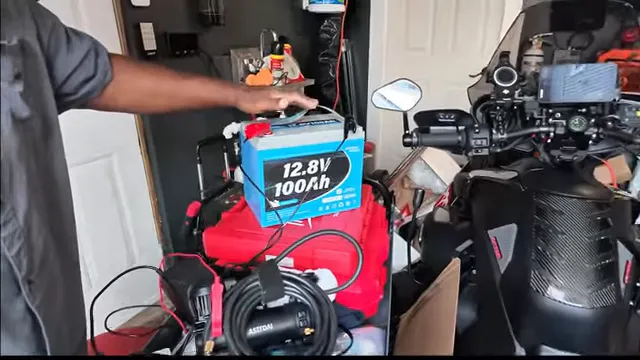
A 100Ah battery can be a flexible power source for a busy workshop full of 12V projects.
Why it makes sense beyond a trolling motor
GRENERPOWER positions this battery for 30 to 70 lb thrust trolling motors, and that is a sensible use case. A 100Ah LiFePO4 battery can be a practical choice for someone running a trolling motor on a fishing boat or kayak.
But the same core strengths make sense in other places too:
Workshop testing: Keep a dependable 12V source available for e-bike and motorcycle accessories.
RV and camping: Run compatible 12V equipment away from shore power.
Solar projects: Use it as part of a properly designed charge-controller and battery system.
Backup power: Pair it with correctly matched equipment for selected emergency-power needs.
Portable vehicle accessories: Power inflators, lights, pumps, and other compatible DC equipment.
For my purposes, it is a strong addition to the workshop because I am always working around 12V systems. I have electric motorcycles, a Can-Am Ryker project, and plenty of accessories that need testing from time to time. A battery like this can stay ready for those jobs.
So, is lead-acid finally dead?
Not completely. Lead-acid batteries are still out there because they are familiar, widely available, and often less expensive up front. But for a lot of portable deep-cycle applications, LiFePO4 is making the old lead-acid setup look less attractive.
This battery delivers 100Ah of capacity in a package weighing about 23 pounds, includes a built-in BMS, offers Bluetooth monitoring, and is designed for a wide range of 12V uses. Those are real advantages if you want easier handling, modern battery management, and better visibility into the battery's status.
The real question is not whether lead-acid disappears tomorrow. The question is whether a lithium battery like this makes more sense for your use case. For a trolling motor, workshop 12V projects, RV use, camping, solar storage, or backup power, I can absolutely see why it would.
My first impression is very positive. The battery charged properly, paired through Bluetooth, showed useful information in the app, and powered the 12V compressor with no problem. So far, so good. Two thumbs up from the workshop.