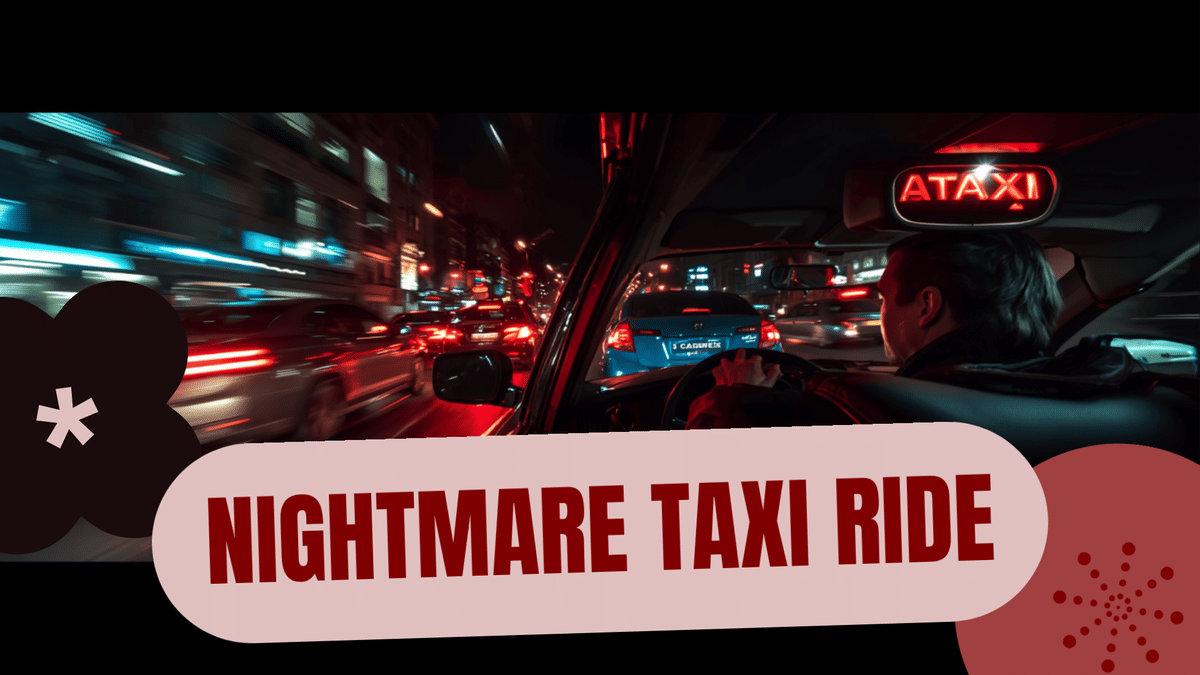
Every so often, even on a tech-focused channel, life throws something at you that has nothing to do with gadgets and everything to do with safety, judgment, and trust.
This was supposed to be the start of a family vacation. A reset. A chance to step away, clear my head, and come back refreshed with new ideas. Instead, the trip to JFK became one of the most frightening experiences my family and I have ever had.
I had booked what I believed was a professional airport car service in New York, one I had used for years. We were traveling as a family of four with eight suitcases, leaving home around 12:30 a.m. for an early international flight out of JFK. Because of airport construction, timing mattered. Missing that window could mean missing the flight.
What should have been a routine airport ride turned into a reckless, terrifying drive filled with speeding, dangerous turns, missed directions, near collisions, and a level of unprofessionalism that still bothers me.
Why this ride mattered so much
Getting to JFK is not always as simple as calling any random cab.
We had:
Four people
Eight suitcases
An international flight
A very early departure time
Known airport construction delays
In other words, this was exactly the kind of situation where you pay extra for a professional service because you want reliability, space, and peace of mind.
That peace of mind disappeared almost immediately.
The first red flags started before we even left
The pickup was scheduled for 12:30 a.m. The vehicle showed up at 10:30 p.m., two hours early.
That alone was strange. Then I approached the vehicle and noticed the driver seemed unfamiliar with it. She was in a large SUV, something like a Cadillac Escalade or Ford Expedition, but she appeared to have trouble with basic operation, even getting the window down and later organizing the luggage in the cargo area.
That was the first moment I started wondering whether this was the right driver in the right vehicle.
Still, with a family trip underway and luggage everywhere, we loaded up and left.
Almost immediately, the driving felt wrong
Once we got on the road, the signs of trouble multiplied fast.
She hesitated leaving the neighborhood, seemed unsure of the route despite having multiple GPS devices running, and made awkward maneuvers that felt like someone handling a large SUV they were not comfortable driving.
At stop signs, she barely stopped or rolled through them.
At turns, she swung the vehicle in a way that felt unstable and unsafe.
More than once, I asked her directly if this was even her vehicle.
She just smiled.
That answer did not inspire confidence.
Things escalated on the Southern State Parkway
Once we got onto the Southern State Parkway, the ride went from concerning to dangerous.
She moved into the left lane and quickly got the SUV up to around 75 to 80 miles per hour. This was not smooth, controlled highway driving. The vehicle was drifting, crossing lane markings, and triggering blind-spot warnings not because other cars were passing, but because she was veering out of her lane.
I kept telling her to slow down.
My wife kept telling her to slow down.
She would ease up for a moment, then speed right back up again.
Inside the vehicle, the tension was rising fast. My son, who has ADHD and scores high on the autism spectrum, was visibly distressed. He was shaking and trying to self-regulate. My daughter was frightened. My wife was alarmed. I was trying to stay calm enough to assess the situation while also realizing this was becoming a real threat.
At that point, I was not thinking about documenting the ride. I was thinking about getting my family there alive.
Sharp turns at highway speed in a full-size SUV
Anyone familiar with parkway driving in New York knows there are stretches where the posted warnings are there for a reason. Sharp curves marked with yellow signs and advisory speeds are not suggestions, especially not in a large SUV loaded with luggage and passengers.
She was accelerating through those turns.
That is what made this especially terrifying. It was not just speeding in a straight line. It was taking hard curves around 75 to 80 miles per hour in a vehicle she did not seem to know how to handle properly.
The whole SUV felt like it was tilting.
By then it was clear this was not a minor issue of someone driving a little aggressively. This was reckless.
Road closure chaos made a bad situation worse
Ahead on the Southern State, signs indicated lane closures around Exit 15. I pointed them out, but she kept going until traffic and police activity made it impossible to ignore.
I had to repeatedly tell her to get off the parkway.
Once off, she seemed completely lost.
Instead of confidently rerouting, she made dangerous decisions while trying to figure out where to go. At one point she nearly turned the wrong direction. At another, she turned left from the middle lane and almost hit another vehicle. Then came a right turn where the SUV went up onto the curb before backing off.
This was a driver trying to navigate in real time without enough control over the vehicle or enough command of the route.
And all of this was happening while my family sat trapped in the back, hoping each next move would not be the one that ended the night in disaster.
The near crash on the Belt Parkway
The most terrifying moment came on the Belt Parkway.
After another series of high-speed curves, traffic ahead had slowed abruptly. She was looking down at her GPS with one hand on the wheel while we were closing in on the back of a stopped vehicle.
That was the moment everybody started screaming.
I yelled at the top of my lungs. My wife was screaming. My kids were screaming. She looked up at the last possible second and slammed on the brakes.
We stopped just inches behind the car in front of us.
I still do not know how we did not hit it.
Had that SUV slammed into the vehicle ahead at highway speed, especially in a chain of traffic, the outcome could have been catastrophic.
She apologized over and over, but by then the damage was already done emotionally. The trust was gone, and the only goal left was survival.
Even the recovery was dangerous
It did not stop there.
Traffic had slowed because of a broken-down vehicle with hazard lights on. After nearly rear-ending traffic, she rolled slowly behind it, almost frozen. I had to tell her she needed to go around.
Then the driver of that disabled vehicle got out and walked up to our SUV because we had come up so close behind him. She rolled down the window briefly, then rolled it back up. Realizing where she was and what time it was, she had to back up on the Belt Parkway to get around him.
Backing up on a parkway at 1:00 in the morning, with traffic around you, is about as dangerous as it sounds.
There were multiple moments where we nearly got hit again during that maneuver.
JFK traffic was the only thing that slowed her down
Once we got onto the JFK approach roads, she was still taking turns too fast. The first real relief came only when traffic boxed us in.
We sat in bumper-to-bumper airport congestion for about an hour.
Ironically, airport construction and traffic, the very thing I had worried might make us late, became the only reason the vehicle was no longer being driven like a missile.
But even in that final stretch, there was trouble.
When it came time to reach Terminal 4, she was in the wrong lane and seemed unable to process directions quickly enough to correct. I had to roll down my window and wave to other drivers, asking them to let us over so we could make the terminal turn.
That should never happen in a pre-booked airport ride.
At the terminal, she still expected a tip
When we finally arrived, everybody was shaken.
We unloaded the luggage. I paid the agreed cash fare. Then she stood there as if waiting for a tip.
That was the moment I told her plainly that this was the worst experience I had ever had with that car service and that she had nearly killed my family.
Her response was basically, “Okay, okay,” and she walked away.
After a ride like that, there was nothing normal left to say.
The complaint process was almost as frustrating as the ride
Once I reached South America, I called the company and filed a complaint.
I was told someone from the complaint department would call me back on Monday.
That call never came.
About a week later, I finally received a follow-up that amounted to an apology.
For me, that was not enough.
This was not a minor inconvenience. This was not a late pickup or a rude interaction. I had paid roughly $125 for a service that put my entire family at risk.
And from everything I experienced, I strongly believed the company had assigned a driver to a vehicle she was not properly familiar with. The early arrival, the uncertainty with the SUV, the awkward handling, and the dangerous decisions all pointed in that direction.
Why we did not just get out
This is one of those questions people ask easily from a distance.
Why not just get out of the car?
Here was the reality:
We were on the highway in the middle of the night.
It was cold.
There were four of us.
We had eight suitcases.
We were headed to an international terminal with a time-sensitive flight.
A regular cab would likely not have been able to take all of us and all the luggage.
That does not make the choice ideal. It means the options were terrible.
In the moment, I weighed what I could. We were already committed to a route that runs directly into JFK. The best chance seemed to be getting there as quickly and safely as possible, while trying to manage the driver and keep the family calm.
It is easy to second-guess decisions after the fact. Much harder when you are making them at highway speed in a dangerous situation.
What this experience taught me about airport transportation
This incident changed how I think about “routine” travel.
When you book an airport car service, you are not just paying for a ride. You are paying for:
Competence
Vehicle familiarity
Safe decision-making
Professionalism under pressure
Clear navigation and communication
If any one of those is missing, the risk goes up fast.
If several are missing at once, what should be an airport transfer can turn into a near disaster.
My takeaway for anyone booking a taxi or car service in NYC
If you are booking a ride to JFK, LaGuardia, or any major airport, especially for a family trip, do not assume a long-established company automatically means a safe experience.
Based on my personal experience, here are the practical lessons:
Pay attention to early warning signs. If the driver seems unfamiliar with the vehicle before the ride even begins, take that seriously.
Do not ignore erratic driving in the first few minutes. Rolling stop signs, awkward turns, lane drifting, and confusion are major red flags.
Large vehicles require confident handling. A full-size SUV loaded with passengers and luggage is not forgiving at high speed.
Airport rides are not the time for guesswork. The route, terminal access, and timing should already be understood by the driver.
Professional service should mean more than showing up. Safety is the service.
Why I will never use Carmel again
I had used Carmel for years. That is what made this experience even more disappointing.
This was not about trying to tear down a company for the sake of it. If anything, prior history should have worked in their favor. But that history also made the failure more serious. When a company earns your trust, it carries a bigger responsibility not to betray it.
In my case, that trust is gone.
I will never use Carmel taxi service in New York again.
Final thought
I am thankful my family made it through that ride safely. I am thankful we got to our destination. And I am thankful this story is one I can tell rather than one someone else has to piece together after the fact.
Sometimes the most important message has nothing to do with tech specs, upgrades, or gear. Sometimes it is simply this: be careful who you trust with your family’s safety.
A ride to the airport should not feel like surviving a disaster.